
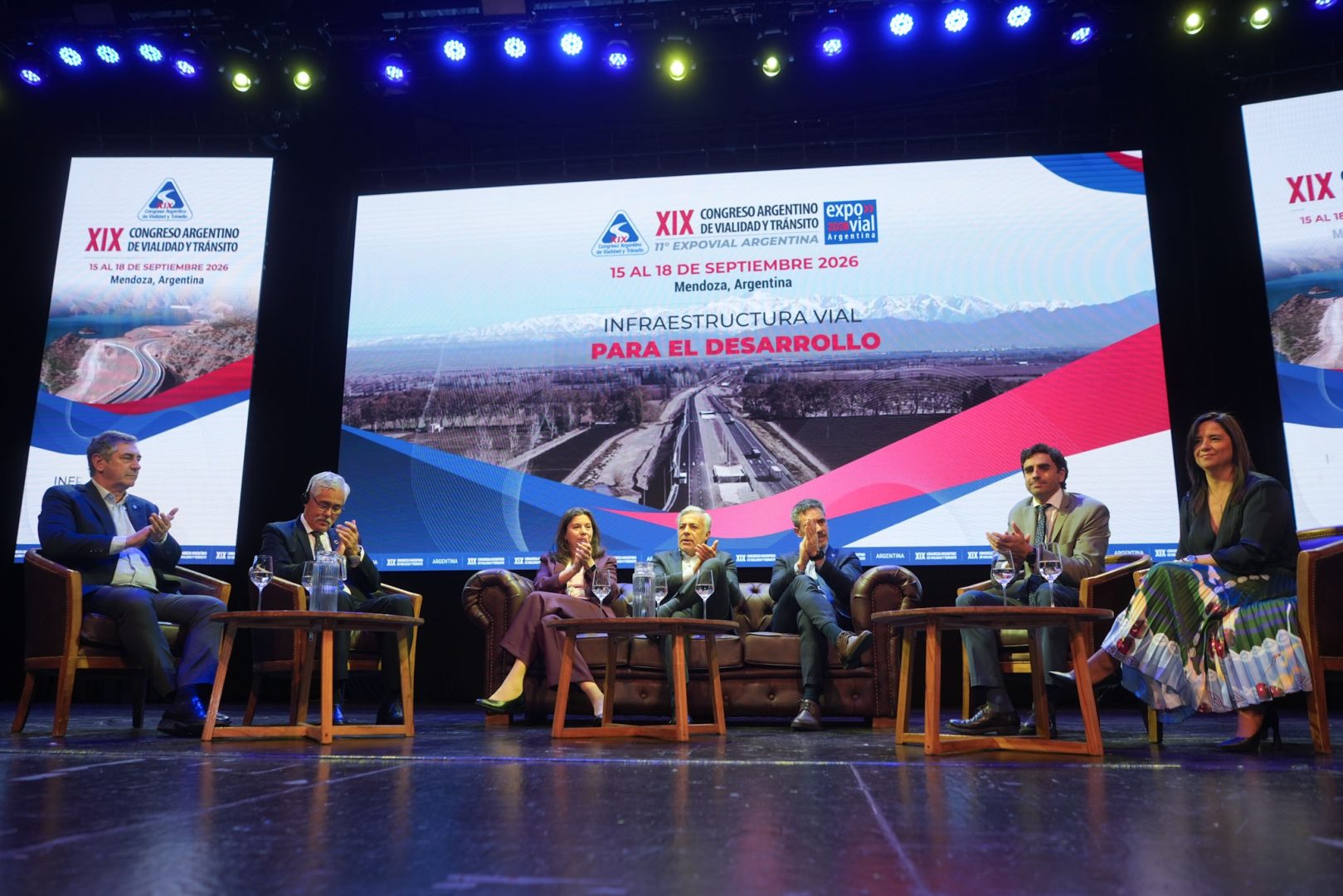
MENDOZA, ARGENTINA — September 18, 2026 — The International Road Federation (IRF Global) concluded the 7th IRF Latin America Regional Congress & Exhibition in Mendoza, Argentina, bringing together more than 1,000 delegates from across Latin America and beyond for four days of high-level dialogue, technical exchange, innovation, and collaboration on the future of roads and mobility.

Held from September 15–18, 2026, in proud partnership with the Asociación Argentina de Carreteras (AAC) and in conjunction with the XIX Congreso Argentino de Vialidad y Tránsito and 11° ExpoVial Argentina, the Congress provided a major platform for transportation leaders, government representatives, road agencies, development institutions, academics, engineers, technology providers, and private-sector stakeholders to exchange knowledge and explore practical solutions to the region’s evolving transportation challenges.
Under the broader theme of advancing road infrastructure for development, the Congress placed particular emphasis on artificial intelligence, smart mobility, intelligent transportation systems (ITS), road safety, connected technologies, and infrastructure resilience. Technical sessions and high-level forums examined how emerging technologies can be translated into practical applications that improve the planning, construction, operation, maintenance, and safety of transportation systems.

The opening ceremony brought together senior leaders from Argentina and the international road community, including Alfredo Cornejo, Governor of Mendoza; Dr. Natalio Mema, Minister of Government, Infrastructure and Territorial Development of Mendoza Province; Emma Albrieu, President of the Argentine Road Association; Ignacio Lamothe, Secretary General of the Federal Investment Council; and Marcelo Jorge Campoy, General Director of Vialidad Nacional, alongside IRF Global leadership and international transportation experts.
INNOVATION MUST SERVE PEOPLE
Addressing the Congress, Randell Iwasaki, Chairman of IRF Global, highlighted the extraordinary pace of technological change across the transportation sector while emphasizing that innovation must remain grounded in the fundamental responsibilities of the road community.
“Artificial intelligence is transforming the way we plan, build, operate, and maintain infrastructure. Intelligent transportation systems are allowing agencies to understand road conditions and manage traffic in real time. Connected technologies are creating new possibilities for safer and more efficient mobility.”
Iwasaki emphasized that technological progress does not change the fundamental responsibilities of transportation professionals:
“At the same time, our fundamental responsibilities have not changed. We must save lives. We must maintain our infrastructure responsibly. We must strengthen resilience. And we must ensure that transportation connects people to jobs, education, health care, markets, and opportunity.”
His message underscored a central theme of the Congress: technology is a means to achieve better transportation outcomes—not an end in itself.

A REGIONAL PLATFORM FOR PRACTICAL SOLUTIONS
The Congress brought international expertise together with Latin America’s regional experience, creating opportunities for participants to examine both emerging technologies and established practices through a regional lens.
The technical program addressed key areas including AI applications in road infrastructure and mobility, smart mobility and connected systems, ITS, and road safety innovations and prevention technologies.
The exhibition further complemented the technical program by showcasing technologies, products, and services supporting the transformation of road infrastructure and mobility. Together, the Congress and exhibition created opportunities for public- and private-sector stakeholders to establish new connections, exchange experience, and identify potential areas for cooperation.
The event also highlighted the strategic importance of Mendoza within South American transportation networks. As a key node of the Central Bi-Oceanic Corridor linking Argentina and Chile and providing connectivity toward the Pacific, Mendoza offers an important setting for discussions on regional connectivity, international routes, infrastructure investment, and cross-border mobility.

CONNECTING LATIN AMERICA TO THE GLOBAL ROAD COMMUNITY
The Mendoza Congress reflects IRF Global’s broader mission of connecting transportation professionals and institutions across regions and creating platforms where expertise, innovation, and partnerships can translate into practical progress.
With participation from more than 1,000 delegates, the 7th IRF Latin America Regional Congress demonstrated the strength and diversity of the Latin American road community while reinforcing the value of international cooperation in addressing common challenges.
“From AI and connected mobility to road safety and resilient infrastructure, the conversations taking place in Mendoza reflect the transformation underway across our sector,” said IRF President & CEO Patrick Sankey. “IRF Global is committed to continuing to provide platforms that connect regional priorities with global knowledge and help turn innovation into practical solutions for safer, more resilient, and better-connected transportation systems.”
The 7th IRF Latin America Regional Congress & Exhibition was held at the Centro de Congresos y Exposiciones Emilio Civit in Mendoza, Argentina, from September 15–18, 2026.


More Information
Related Posts
Every major road project starts with a similar challenge: industrial hubs and towns that need to be better connected, busy roads that need to be safer and more resilient, and supply routes that need to move people and goods more efficiently. Every customer expects the same thing from the teams they entrust with that work: delivery certainty.

The International Road Federation (IRF Global) has signed a Memorandum of Understanding (MoU) with the Institute of Transportation Engineering (ITE), Bulgaria, to establish an IRF Global Regional Office and Training Institute serving Bulgaria and Southeast Europe.
The International Road Federation (IRF Global) concluded the 7th IRF Latin America Regional Congress & Exhibition in Mendoza, Argentina, bringing together more than 1,000 delegates from across Latin America and beyond for four days of high-level dialogue, technical exchange, innovation, and collaboration on the future of roads and mobility.