
An op-ed by Josh Baker, Balkans Region General Manager, Bechtel
Every major road project starts with a similar challenge: industrial hubs and towns that need to be better connected, busy roads that need to be safer and more resilient, and supply routes that need to move people and goods more efficiently. Every customer expects the same thing from the teams they entrust with that work: delivery certainty.
Delivery certainty is what matters most in infrastructure. Governments need to know that what they commission will be built safely, to a standard that lasts, and in a way that creates long-term value for the communities it serves. For more than 30 years, Bechtel and our joint-venture partner ENKA have built more than 750 kilometres of motorway across the Balkans. That experience has taught us that while every country and project has its own character, successful delivery comes down to turning complexity into delivery certainty.
Take the Morava Corridor in Serbia. It runs through a flood plain that has flooded for centuries, so building a motorway there meant building flood protection too, with around 32 kilometres of river regulation and 22 kilometres of dykes. In North Macedonia, on Corridors 8 and 10d, the challenge is rugged terrain, with motorway sections spread across the breadth of the country. The two programmes look nothing alike, yet there are strong parallels in how we approach their challenges and in what it takes to achieve successful outcomes. Across all of our projects, that approach rests on three pillars.
The first is starting with the end user in mind. Road users and governments expect quality and resilience, not just kilometres. A motorway must be designed and built for longevity and capacity if it is to solve a connectivity problem. Anything less simply postpones the problem and passes it to the next generation. That is why we produce many of our materials in purpose-built precast yards and production facilities on our sites, allowing us to track products from start to finish. It is also why we set up accredited testing laboratories in both countries. On the Morava Corridor alone, the laboratory carries out more than 60,000 tests a year.
The second is people. Delivery certainty depends on how people feel about, and interact with, a project, both during construction and long after it opens. Our community relations teams stay close to the communities along each route, listening to concerns and incorporating that local knowledge into how we plan and carry out the work. We also buy locally wherever we can: 80% of our procurement in Serbia goes to local businesses.
That same care extends to our own workforce, and safety demands constant effort. We use AI tools, digital tracking of safety talks, and “safety safaris” that recreate real site hazards in a controlled setting. These initiatives form part of a wider programme to build a genuine safety culture, one in which every team member looks out for the safety and wellbeing of those around them. As a result, across the Morava Corridor and North Macedonia’s Corridors 8 and 10d, we have passed 23 million safe work hours.
The third is early engagement. Major infrastructure programmes are complex long before construction begins, and bringing the right expertise to the table early can help customers better understand scope, cost, schedule, and risk. For industry, it creates opportunity to work with governments and other partners to develop projects that are technically sound, financeable, and deliverable. For us, early engagement also opened the door to backers such as UK Export Finance, whose support helped get work started.
That collaboration works best when roles and responsibilities are clear. Every major infrastructure programme involves risks—from ground conditions and land access to permits and currency—and successful delivery depends on understanding those risks and allocating them to the party best positioned to manage them. Fairly allocating risk keeps international capital and expertise in the region rather than pricing them out. Clear contracts and aligned incentives help create the confidence needed to bring international capital and expertise into the region.
None of this works with an “us versus them” mindset. Three decades of joint-venture work have shown us that partnerships succeed with one integrated team, one set of standards and shared incentives. The same holds true between governments, lenders, and industry.
As governments across Eastern Europe plan the next generation of corridors, one lesson from our experience is clear: the earlier governments, industry, and financing partners work together, the more certainty they can create for the communities and economies these projects are ultimately built to serve.
Complexity is unavoidable. Uncertain delivery is not.


More Information
Related Posts
Every major road project starts with a similar challenge: industrial hubs and towns that need to be better connected, busy roads that need to be safer and more resilient, and supply routes that need to move people and goods more efficiently. Every customer expects the same thing from the teams they entrust with that work: delivery certainty.

The International Road Federation (IRF Global) has signed a Memorandum of Understanding (MoU) with the Institute of Transportation Engineering (ITE), Bulgaria, to establish an IRF Global Regional Office and Training Institute serving Bulgaria and Southeast Europe.
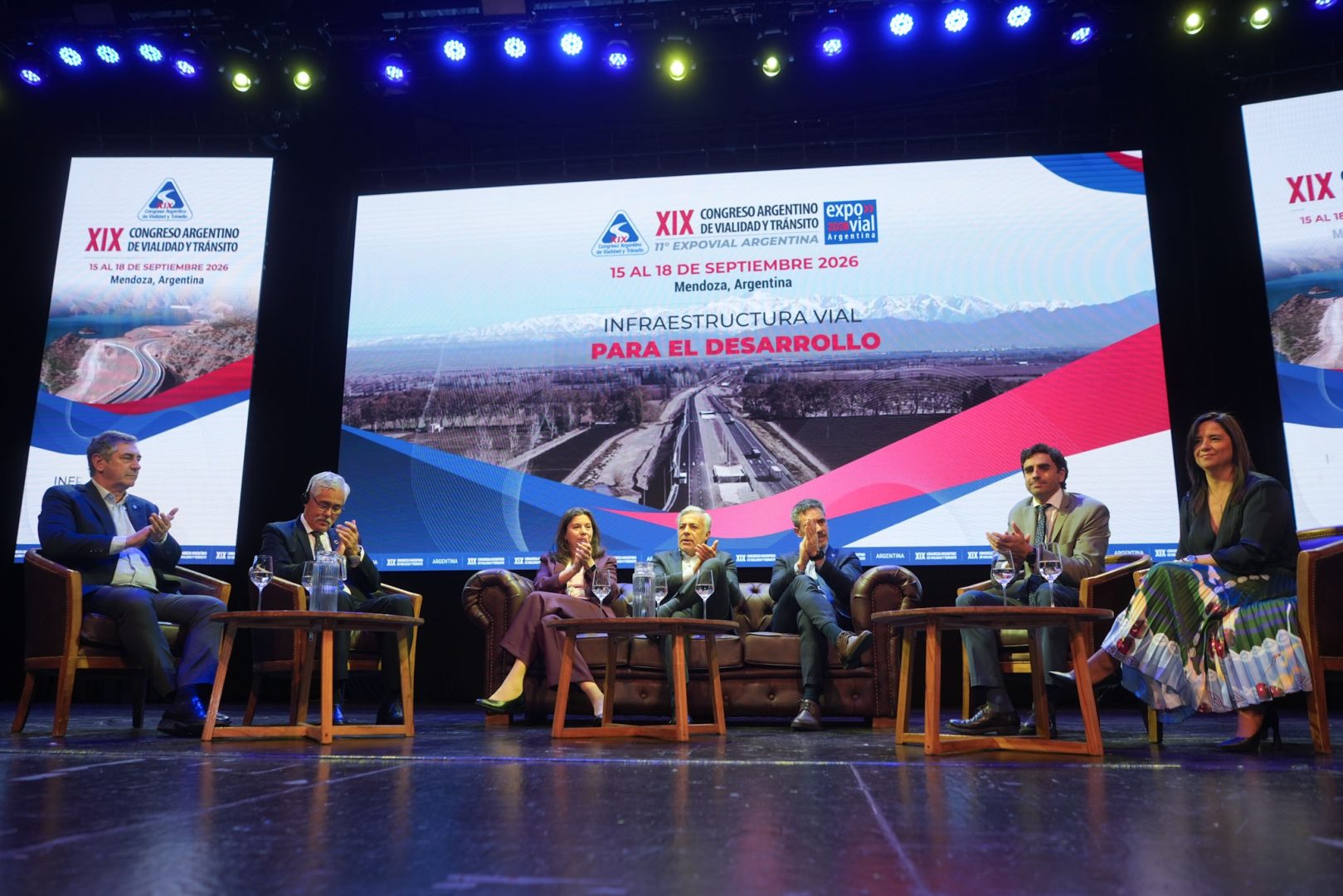
The International Road Federation (IRF Global) concluded the 7th IRF Latin America Regional Congress & Exhibition in Mendoza, Argentina, bringing together more than 1,000 delegates from across Latin America and beyond for four days of high-level dialogue, technical exchange, innovation, and collaboration on the future of roads and mobility.